Power · Hardware
Battery life calculations
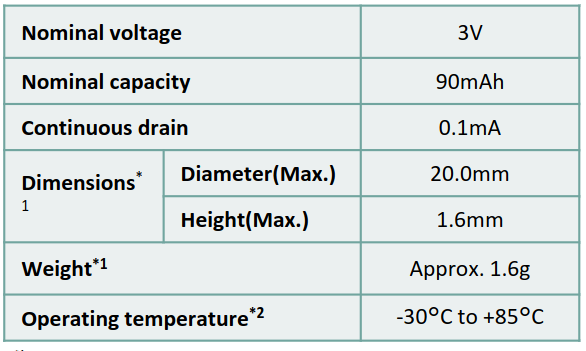
One of the large goals of the Jolt is a long battery life. Since it’s not a rechargeable unit, it would be wasteful and unfun to need to replace the battery often. The G-Shock comes stock with a Panasonic CR2016 battery, and the datasheet states it’s 90mAh, so calculations should be fairly easy to make if I know the average power draw of the Jolt.
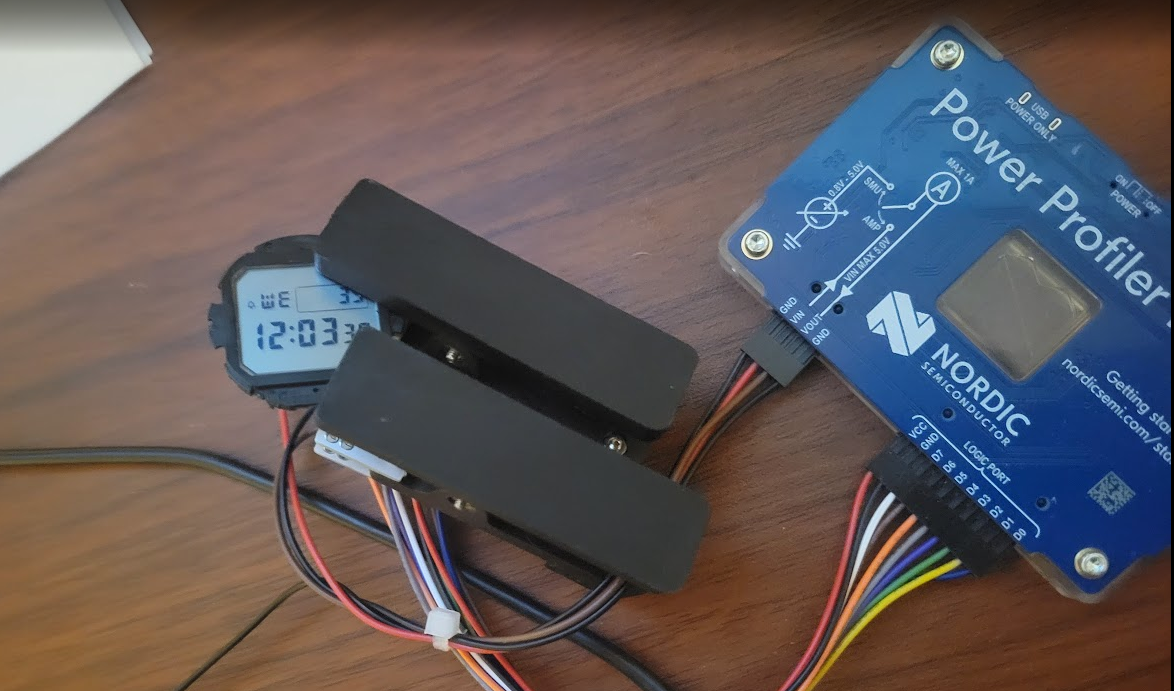
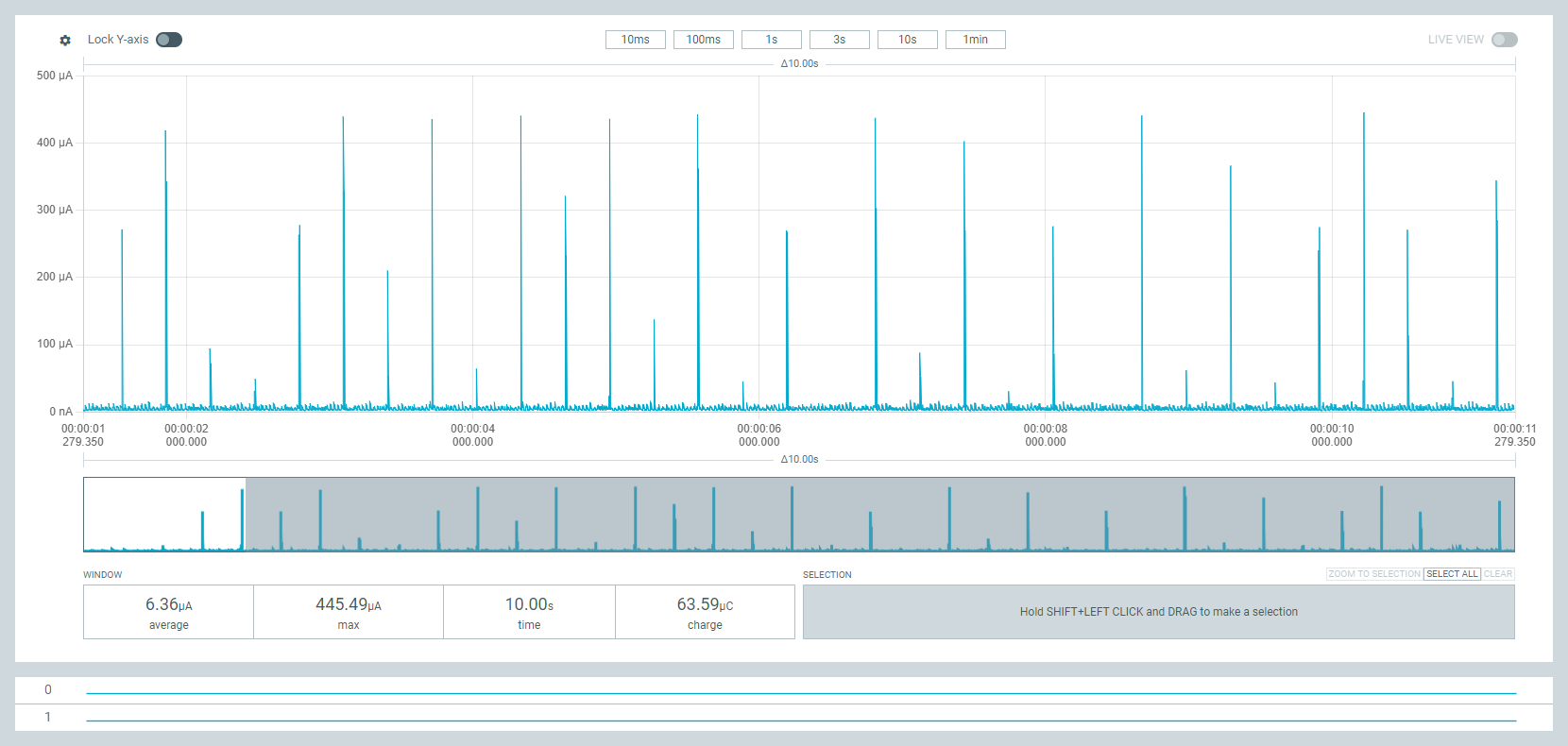
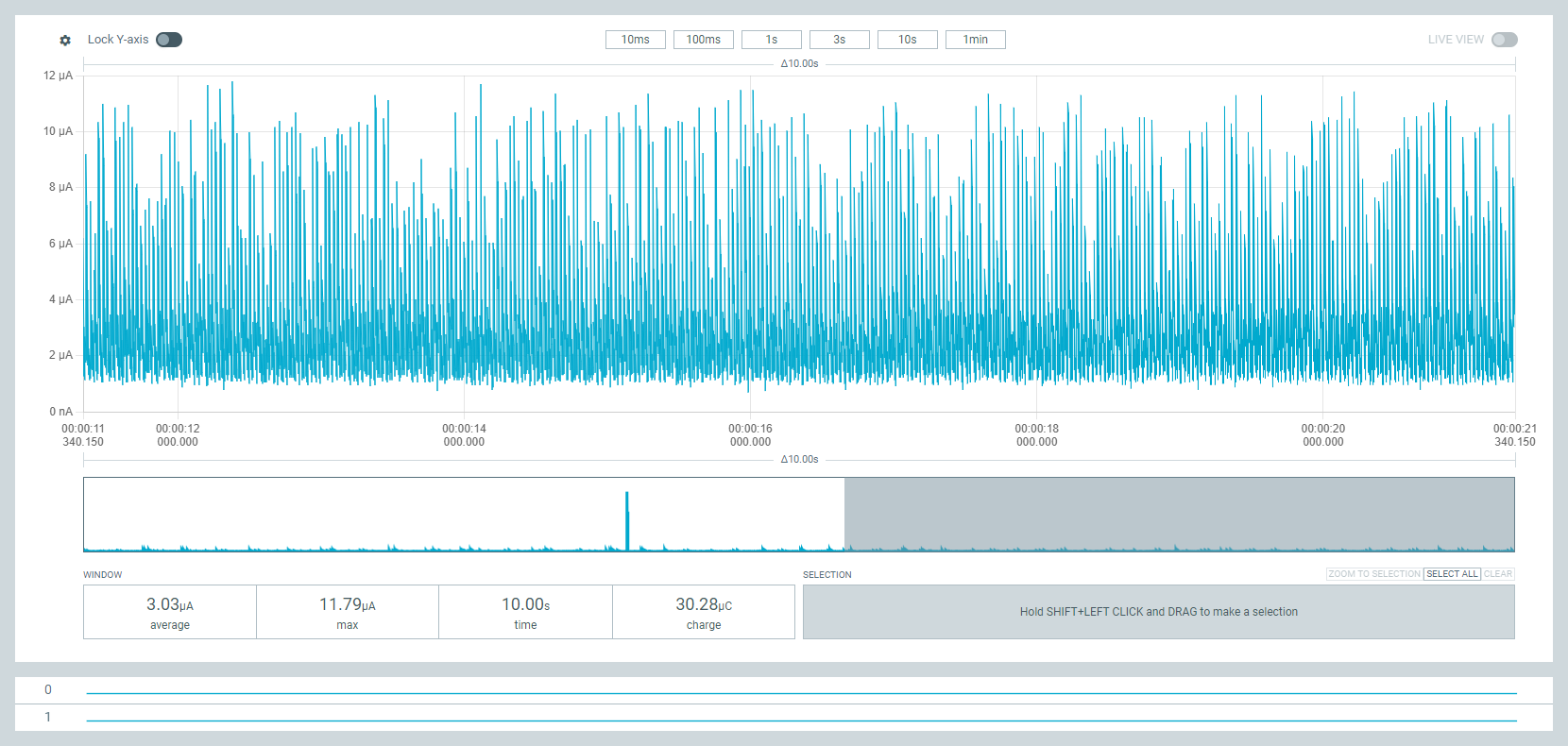
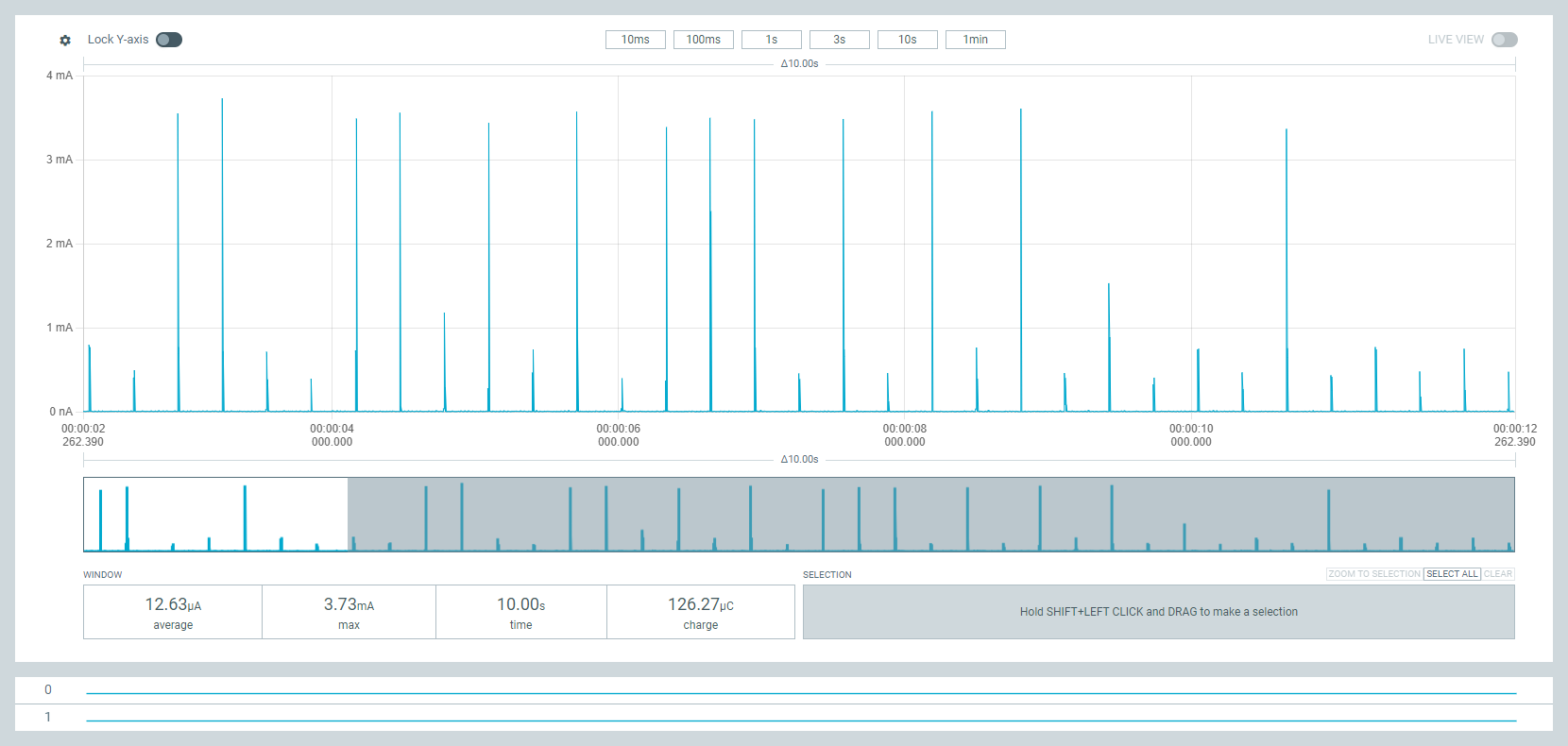
There are four ways the watch is used that heavily impact the battery: Normal, Sleep Mode, Counting Steps, and Tapping Enabled. I measured the power usage of each of these using a Nordic Power Profiler Kit II . Below is an image of the setup and the results.
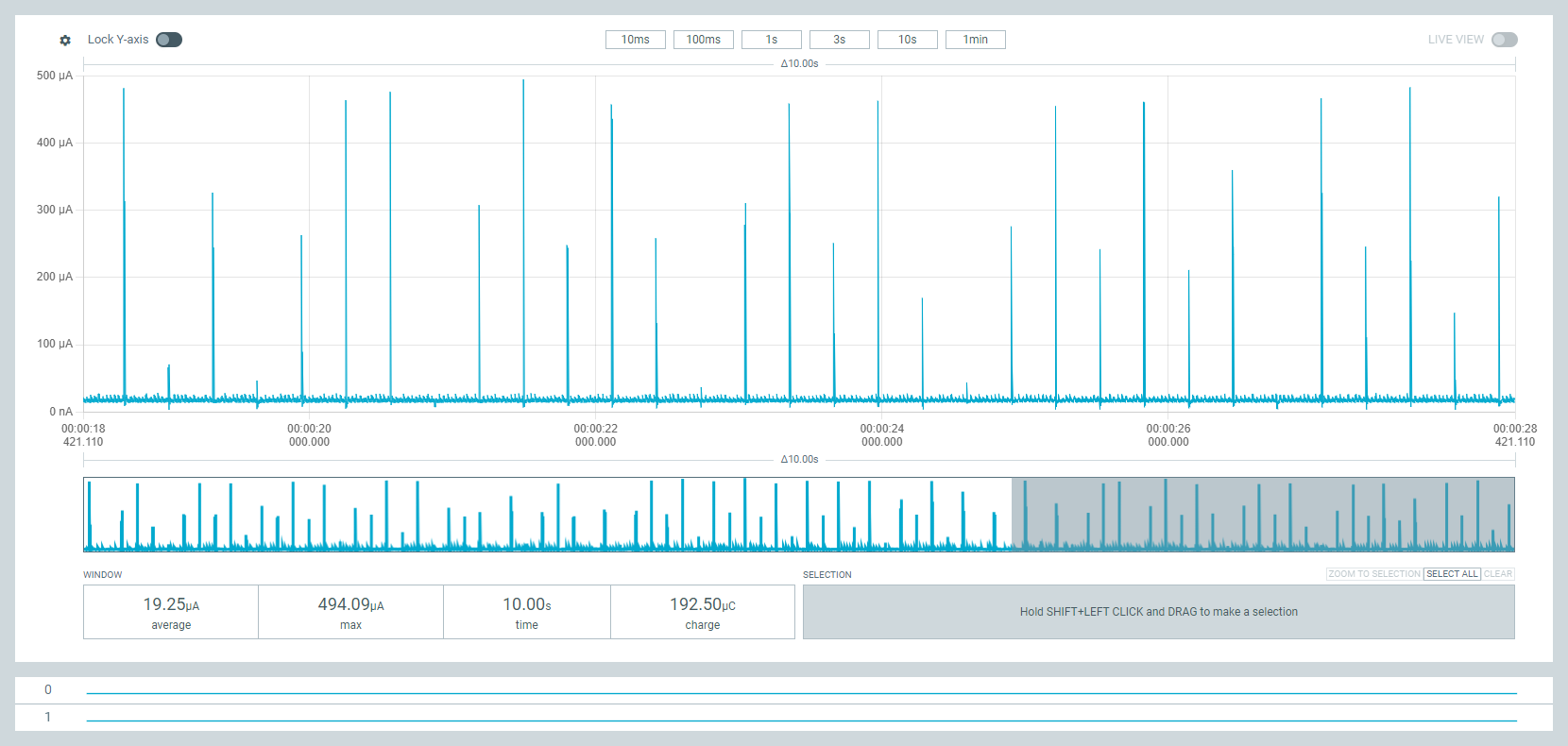
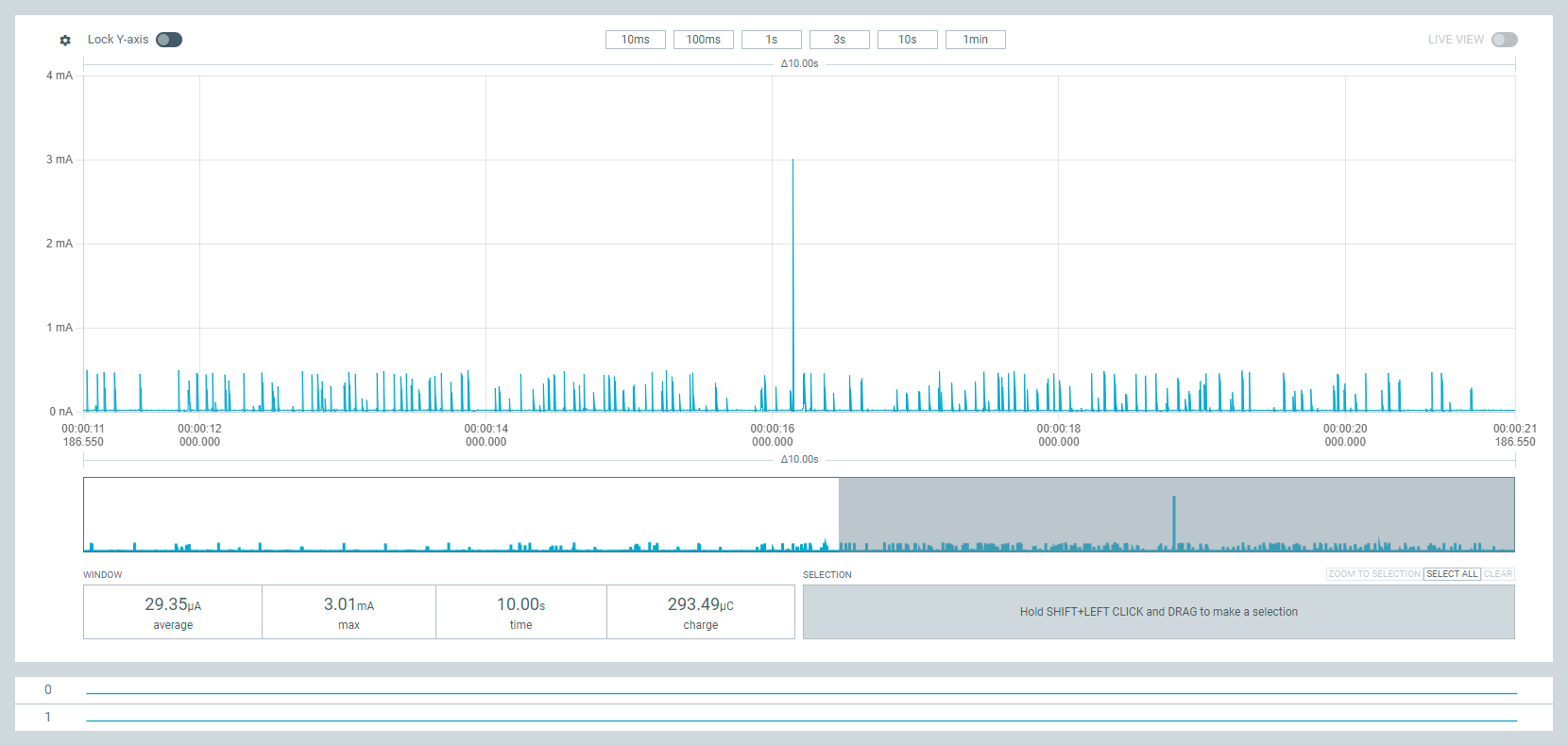
| Function | Current Draw (μA) |
|---|---|
| Clock face | 6.36 |
| Clock face in sleep mode | 3.03 |
| Counting steps | 12.63 |
| Blackjack face, tapping enabled, but not tapping the board | 19.25 |
| Blackjack face, tapping the board continuously | 29.35 |
From there, we can find the power draw based on the battery’s capacity. From the battery’s curves, we see that the battery dies near 2.2V and I tested the watch works fine at 2V, so we can assume we can use the total 90mAh of the CR2016 without any voltage cut-off issues.
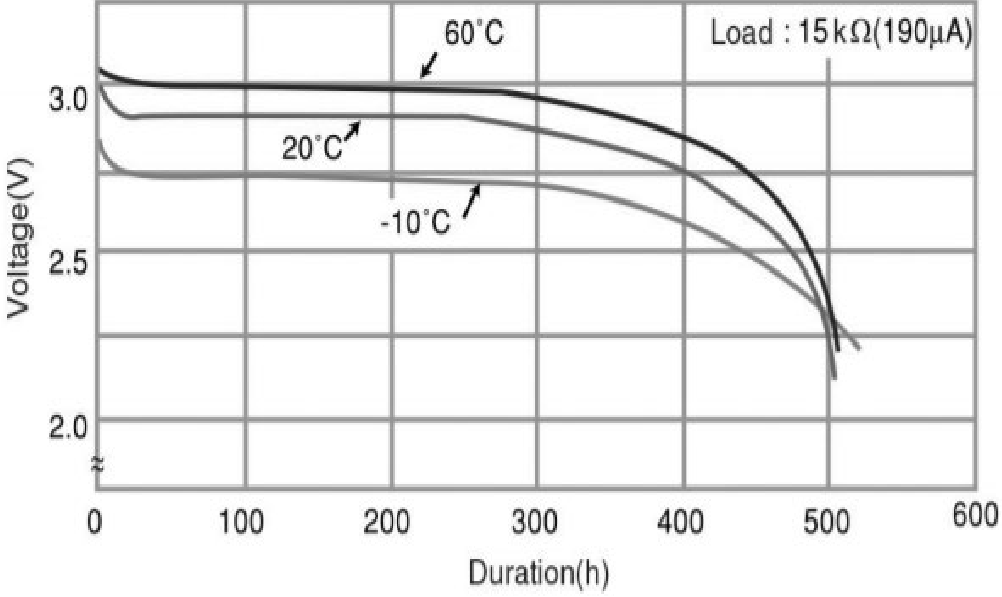
Estimating that an average user is awake for 16 hours a day, never uses the sleep mode, is moving around 40% of their day, and plays a tapping game for 2 minutes daily, we get that the battery life should be about 1 year and 3 months (466 days).
Estimating for a user who has the watch in sleep mode 90% of the time, and never uses the step counter nor tapping games, that would be 3 years (1,115 days).